Line-Art Dog Illustrations: Capturing Canine Spirit in Pencil
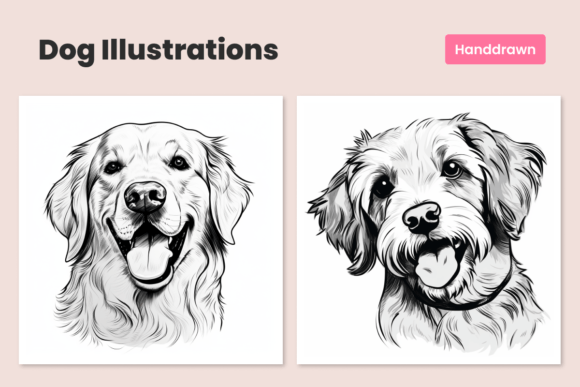
There’s a timeless quality to a well-executed pencil drawing. It strips a subject down to its essence, relying on the weight of a line, the texture of a stroke, and the careful use of negative space. This is precisely the power harnessed by the Line-Art Dog Illustrations | Pencil Art collection. Far from simple sketches, these are meticulously crafted portraits that convey the personality and soul of our canine companions. Featuring a beautifully rendered Golden Retriever and a spirited Terrier, this set offers more than just images; it provides versatile design assets with a distinct, handcrafted character.
The Anatomy of a Pencil Stroke: Visual Characteristics and Appeal
What sets this pencil art apart is its dedication to realistic line work. The illustrator hasn't relied on heavy shading or fill, instead using varying line weights and densities to create form, depth, and texture. Look closely at the Golden Retriever illustration. The flowing lines around its ears and neck suggest the softness and movement of its fur, while the confident strokes defining its eyes and nose capture a gentle, intelligent expression. The white background isn't just empty space; it's a deliberate choice that amplifies the illustration's clarity and makes it incredibly adaptable for layering into different projects.
The Terrier, by contrast, showcases a different energy through its line work. Sharper, more defined strokes capture the breed's wiry coat and alert posture. The personality is unmistakable—playful yet determined. This stylistic consistency across both illustrations makes them a cohesive pair, perfect for use together in a series or as standalone pieces. The appeal lies in this blend of technical skill and emotional resonance. They feel personal, authentic, and imbued with a warmth that more sterile digital graphics often lack. This isn't just a generic dog vector; it's a piece of pencil art that tells a story.
Beyond the Sketchbook: Strategic Applications for Creators and Brands
The true value of these Line-Art Dog Illustrations is their incredible versatility. Their clean, high-contrast style makes them suitable for a vast range of applications, moving seamlessly from personal projects to commercial branding. For designers and brand strategists, these illustrations are a goldmine for creating a memorable and approachable brand identity. Imagine a pet grooming service, a boutique dog treat company, or a veterinary clinic using the Golden Retriever as a central element in their logo design. Paired with the right serif font or a friendly sans serif font, it immediately establishes a brand that is trustworthy, caring, and professional.
For publishers and content creators, the possibilities are equally rich. These illustrations are perfect for editorial design, adding a sophisticated touch to magazine articles, blog posts about pet care, or features on dog breeds. Their high-resolution nature ensures they look stunning in both digital and print media. Consider using them for packaging design on artisanal pet products—the pencil texture adds a tactile, premium feel that resonates with quality-conscious consumers. They are also ideal for social media graphics, creating eye-catching posts that stand out from the noise of stock photography.
Furthermore, the white background and clear lines make these illustrations a fantastic resource for interactive and educational projects. They are perfectly suited for coloring books or coloring pages, offering a satisfying and creative activity for adults and children alike. Crafters can use them for custom stationery, embroidery patterns, or vinyl decals. The lack of a complex background means they can be easily isolated and incorporated into any design layout without clashing with other elements.
Integrating Line Art into a Cohesive Visual Language
When incorporating a distinct style like this pencil art into a project, consistency is key. The strength of the illustration lies in its handcrafted feel, so it pairs best with typography and design elements that complement, rather than compete with, that quality. A common mistake is to combine it with overly ornate or digital-looking fonts, which can create visual dissonance.
For a harmonious look, consider these font pairing strategies:
- With a Serif Font: Pairing the illustrations with a classic serif font like Garamond or Baskerville creates a timeless, editorial aesthetic. This combination works beautifully for book covers, high-end magazine layouts, or branding for a professional service with a traditional ethos.
- With a Sans Serif Font: A clean sans serif font such as Lato or Montserrat provides a modern contrast. This pairing is excellent for web design, app interfaces, and contemporary branding where you want the illustration's warmth to soften a minimalist layout.
- With a Handwritten Font: To amplify the personal touch, a subtle script font or handwritten font can be used for headlines or accents. Be cautious here—the font should be legible and not overly decorative, or it will overshadow the artwork. This is great for wedding invitations (for pet lovers!), personal blogs, or boutique product tags.
Think about the overall mood you want to achieve. The Line-Art Dog Illustrations evoke feelings of nostalgia, care, and authenticity. Your typographic and color choices should support that narrative. Use a limited color palette, perhaps letting the pencil lines be the primary focus against a neutral background, or introduce subtle, muted color washes behind the illustrations for a different effect.
A Practical Guide to Using These Design Assets
Before diving into a project, a thoughtful evaluation ensures these illustrations will serve your goals effectively. First, assess the project's tone. Is it playful, serious, luxurious, or rustic? The personality of the Golden Retriever and the Terrier should align with your message. A Golden Retriever often symbolizes loyalty and family, making it ideal for brands targeting households. A Terrier can represent tenacity and energy, a great fit for active or sporty brands.
Next, consider the technical execution. These are high-quality design assets, but always test their appearance at the intended scale. Zoom in on a website mockup or print a test page to ensure the line detail remains crisp and clear. For digital use, the file format matters; vector formats (like SVG) will scale infinitely, while high-resolution PNGs with transparent backgrounds are perfect for layering in design software.
Finally, understand the licensing. If you're using these for a commercial project—for a client, for merchandise, or in a monetized blog—ensure you have the appropriate license. Most premium font and illustration libraries offer clear commercial use terms. Treating these illustrations as a creative font or asset in your toolkit means respecting the creator's work and ensuring your project is legally sound.
In a digital landscape saturated with generic imagery, Line-Art Dog Illustrations | Pencil Art