Sweet Kawaii Food Illustrations: A Design Asset for Every Project
When you're building a visual brand or creating a new product, the assets you choose define the final outcome. You need graphics that are not only beautiful but also versatile and high-quality. This is where a well-curated design asset becomes invaluable. The Sweet Kawaii Food Illustrations collection is one such resource, offering a cohesive set of charming, food-themed graphics designed for modern creators. It’s more than just a folder of cute images; it’s a toolkit for infusing personality and warmth into a wide array of projects.
Understanding the Kawaii Aesthetic in Design
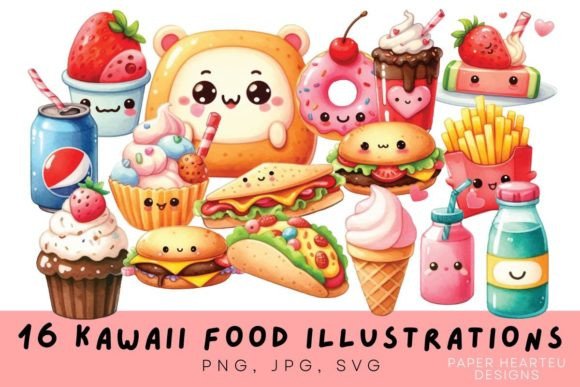
The term "kawaii" translates from Japanese to mean "cute," but in design, it represents a specific aesthetic characterized by simplicity, soft colors, and an endearing, often childlike quality. Sweet Kawaii Food Illustrations capture this perfectly. You’ll find smiling donuts, cheerful cupcakes, and playful sushi rolls, all rendered with clean lines and a friendly, approachable style. This isn't about complex realism; it's about evoking a positive emotional response. The personality is lighthearted, fun, and universally appealing, making it a powerful tool for brands that want to appear friendly, trustworthy, and engaging.
This style’s appeal lies in its ability to cut through the noise. In a saturated market, a design that feels genuinely joyful and distinctive can make a significant impact. These illustrations work exceptionally well as part of a broader brand identity for cafes, bakeries, subscription box services, or children’s brands. However, their utility extends far beyond obvious applications. A tech blog could use a single kawaii coffee cup icon to brand its "morning brew" column, or a wellness coach might incorporate a happy avocado into their social media graphics to promote healthy eating. The key is the emotion it conveys—happiness, comfort, and a touch of whimsy.
Practical Applications: From Digital to Physical
The true value of this asset pack is its flexibility. The provided files are designed for immediate use across multiple formats. Here’s how you can integrate these illustrations into your workflow:
- Digital Branding & Web Design: Use the SVG or PNG files as custom icons on your website, as engaging graphics in email newsletters, or as featured images in blog posts. A set of consistent illustrations can unify the look of a social media feed, making your content instantly recognizable.
- Packaging & Product Design: For small business owners, these graphics are perfect for creating product labels, stickers, thank-you cards, and packaging inserts. A beautifully illustrated sticker on a shipped box enhances the unboxing experience and builds brand loyalty.
- Editorial & Publishing: Bloggers and content creators can use them to break up text, illustrate key points, or design custom Pinterest pins. Publishers can create eye-catching covers for digital planners, recipe books, or children’s activity sheets.
- Print & Decor Projects: The high-resolution JPG and PNG files are ideal for printing. Create postcards, party invitations, posters, or even fabric prints for custom merchandise. For personal use, they can be used in scrapbooking, journaling, or as wall art for a home office.
The inclusion of transparent PNGs, scalable SVGs, and print-ready JPGs at 300 DPI means you’re equipped for almost any project without needing to convert or resize files. This saves valuable time, allowing you to focus on the creative execution rather than technical preparation.
Integrating Illustrations into Your Visual Strategy
Introducing a new set of graphics into your existing visual language requires thoughtful integration. The goal is to enhance, not overwhelm. Start by identifying one or two core illustrations from the Sweet Kawaii Food Illustrations set that best align with your brand’s message. If you run a productivity app, the focused coffee cup might be your anchor. For a baking blog, the cheerful cupcake is a natural fit.
Consistency is crucial for building recognition. Use your chosen illustrations as recurring motifs. This could mean using the same character in the corner of every social media post or creating a pattern from several food icons for your website background. When pairing these illustrations with typography, opt for clean, legible fonts. A simple sans serif font for body text often pairs well with the playful nature of kawaii art, ensuring your message remains clear and professional. For headlines, a slightly more characterful script or handwritten font can complement the style, but always test for readability.
Finally, consider the context and audience. While the kawaii style is broadly appealing, its effectiveness depends on your specific brand voice. For a corporate law firm, it might not be the right fit. But for a wide range of consumer-facing businesses, entrepreneurs, and creators, these illustrations offer a fantastic way to inject warmth and personality into every touchpoint. They are a practical, high-quality design asset that can elevate your projects from generic to memorable, helping you connect with your audience on a more human level.